
What if a nation’s identity could be shaped not by kings or wars, but by songs passed down through generations?
That is the case in Finland, where a small nation started forming its own national identity under foreign rule, through singing songs of Finnish folklore. These songs detailed ancient myths, flawed heroes, nature as a living entity, and magic that helped define an entire culture. Its influence reaches far beyond Finland’s forests and lakes, even inspiring writers like J. R. R. Tolkien and shaping global mythology studies.
In this article, we will explain the national epic of Finland, Kalevala, answering the questions: what is the Kalevala, how did it shape Finland’s language, art, and culture, how Finnish mythology influenced scholarship and literature abroad, what themes and topics does Kalevala explore, and what does the Sampo symbolize in Kalevala.
Buckle in!
What is the Kalevala?
The Kalevala stands as Finland’s national epic and one of the most remarkable collections of folklore in the world. Compiled in the 19th century by Elias Lönnrot, it is not a single authored story but a carefully constructed collection of ancient Finnish oral poetry and songs. To collect these poems, Lönnrot traveled extensively by foot across rural Finland and Karelia, recording runic songs that had been preserved for centuries only through oral tradition.
First published in 1835 and expanded in 1849, the Kalevala captures a mythological world shaped by song, nature, and ancestral memory. Its distinctive poetic form (trochaic tetrameter) reflects the rhythm of traditional Finnish rune-singing and gives the epic its unique voice.
If you’d like to explore the epic yourself, you can read an English version here:
👉 English Translation of Finland’s Epic Poem, The Kalevala (1898) — The Public Domain Review
The importance of the Kalevala in Finnish culture, language and art
The Kalevala has had a profound impact on Finnish identity. During the 19th century, when Finland was under Russian rule, the Kalevala played a key role in strengthening the Finnish people’s national identity. It gave Finns a shared history, mythology, and cultural foundation. Its impact can be seen across several key areas:
- Language and nation-building: The Kalevala helped legitimize Finnish as a literary language and became a cornerstone of the growing nationalist movement. It provided a shared mythological history that unified people across regions.
- Art and music: Artists like Akseli Gallen-Kallela and composer Jean Sibelius drew heavily from its stories.
- National identity: The Kalevala continues to serve as a cultural touchstone, symbolizing resilience or “sisu”, creativity, and a deep connection to nature and tradition.
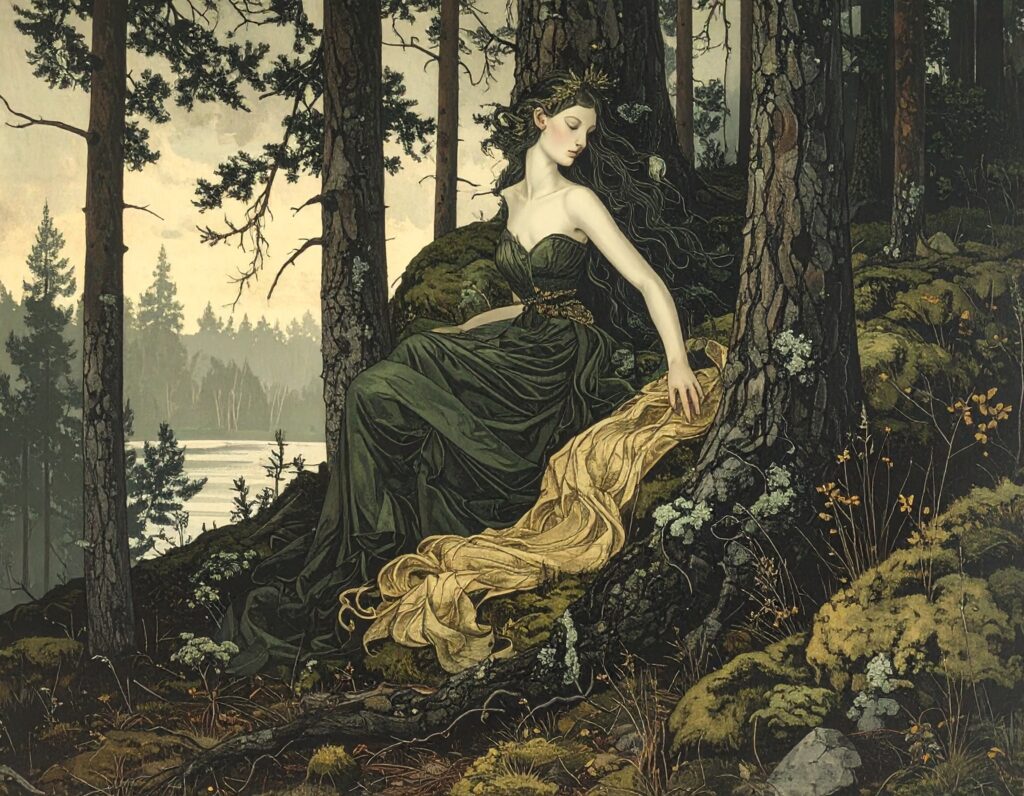
How Finnish mythology influenced J.R.R Tolkien, scholarship and literature abroad
Although the Kalevala is deeply rooted in Finnish oral tradition, its influence has reached far beyond Finland, shaping literature, scholarship, and popular culture across the world.
One of its most well-documented influences is on J. R. R. Tolkien. Tolkien did not simply draw vague inspiration from the Kalevala—he studied it closely and was particularly fascinated by the tragic story of Kullervo. This narrative directly influenced his early work The Story of Kullervo and later elements of his legendarium, especially the character of Túrin Turambar in The Silmarillion. The Kalevala also contributed to Tolkien’s interest in creating mythologies tied to language, a central feature of his literary world. In fact, Tolkien’s language Quenya (High Elvish) is based on the Finnish language.
Beyond individual authors, the Kalevala has been translated into more than 60 languages, making it one of the most widely translated national epics. This global accessibility has allowed it to become part of comparative mythology and folklore studies. Scholars often examine it alongside epics such as Iliad and Beowulf, not because they are identical, but because they each represent foundational mythic traditions within their cultures.
What makes the Kalevala particularly valuable internationally is its representation of a Finno-Ugric mythological worldview, which differs significantly from the Indo-European traditions that dominate much of Western mythology. Its emphasis on incantation, sound, and poetic knowledge as sources of power offers a rare and important alternative perspective in the study of world mythologies.
Themes and Topics in the Kalevala
In Kalevala, knowledge and words hold more power than weapons
The Kalevala presents a rich tapestry of mythological storytelling, centered on legendary figures such as Väinämöinen, Ilmarinen, and Lemminkäinen. Rather than forming a single continuous narrative, the epic consists of interconnected poems that explore both cosmic origins and deeply human experiences.
Some of its most significant themes include:
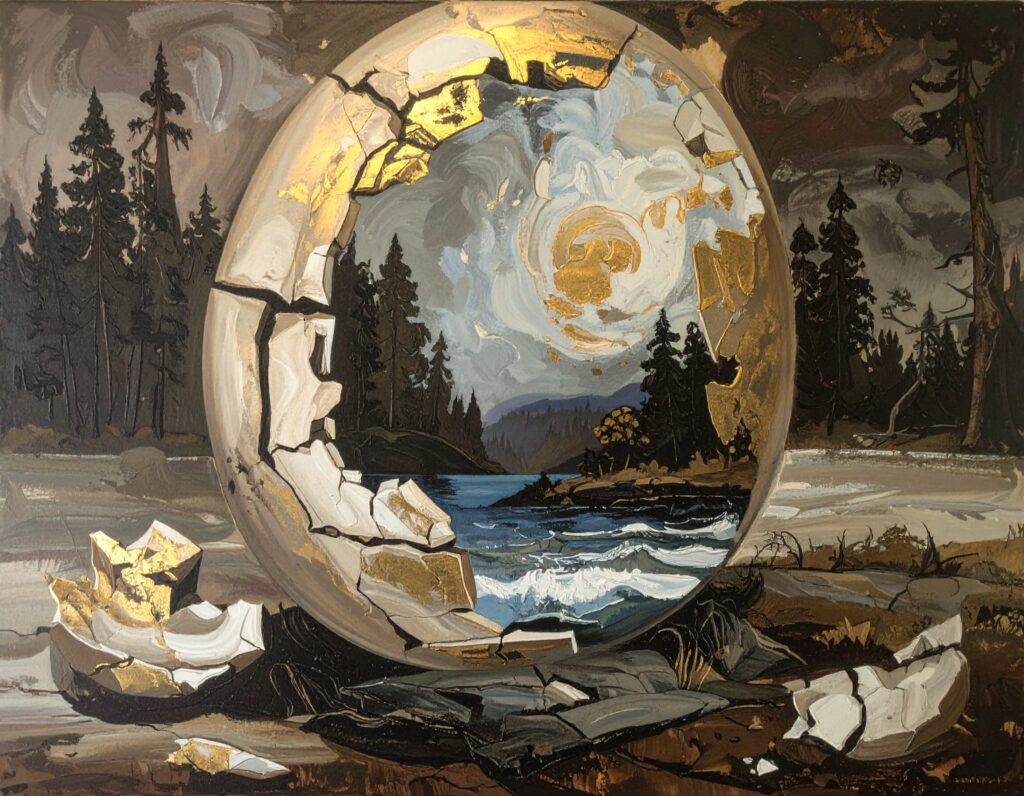
- Creation and cosmology: The Kalevala opens with a creation myth in which the world is formed from fragments of a bird’s egg. Unlike many mythologies where gods create the world intentionally, Kalevala’s universe is born by an accident through nature. A bird laying eggs is an everyday, almost humble act, suggesting that life and creation are rooted in nature itself, not distant divine command.
- Heroism and flawed characters: Unlike many classical epics, Kalevala’s heroes are not purely noble. They are complex, often impulsive figures whose strengths are matched by their weaknesses, making their stories more human and tragic.
- The power of words and knowledge: Magic in the Kalevala is primarily verbal. Spells are sung, and knowledge of the correct words grants power over nature and others. For instance, when the heroes fight each other, they do not use weapons but rather sing to cast spells at each other.
- Love, revenge, and tragedy: Many stories explore emotional extremes: unrequited love, betrayal, and vengeance. The tale of Kullervo, for instance, is one of the darkest and most tragic narratives in European folklore.
- Nature as a living force: Forests, lakes, animals, and spirits are not just settings but active participants in the narrative. This reflects a worldview in which nature is similar to humans: it has its own will and powers, and should be treated as an equal, living thing.
- The mystery of the Sampo: The Sampo is one of the epic’s central symbols. Often interpreted as a magical mill that produces wealth, it has also been seen as a metaphor for prosperity, cosmic order, or even cultural stability. The quest for the Sampo highlights a recurring theme in the Kalevala: the pursuit of power and its consequences. Even though the heroes succeed in stealing it, the Sampo is ultimately destroyed, suggesting that greed and conflict can prevent lasting gain.
The myth doesn’t end: The questions Kalevala leaves behind
If a single source of wealth, like Sampo, could bring prosperity to all, why does it so often lead to conflict instead of peace?
The Kalevala is not just a story of the past—it is a question posed to the present. It leaves us with questions that still feel surprisingly modern:
If a single source of wealth, like Sampo, could bring prosperity to all, why does it so often lead to conflict instead of peace?
If true power in the Kalevala comes from knowing the right words rather than wielding weapons, what does that reveal about the nature of power itself?
Perhaps the Kalevala endures because it does not offer simple answers. Instead, it invites us to reflect:
Is true strength found in knowledge or in action?
Can prosperity be shared without conflict?
And in a world increasingly distant from nature, what have we forgotten that these ancient songs once knew?
In the end, the Kalevala reminds us that culture is not only inherited, it is remembered, retold, and reimagined. Just as Elias Lönnrot once gathered these stories from scattered voices, each generation must decide what meaning they carry forward.
Resources to learn more about the Finnish culture and language
Are you interested in learning more about the Finnish culture and language? Check out our Finnish courses, or read about other resources for learning Finnish in our article Learn Finnish Online! Tips for Free Apps, Courses, and Other Resources
Read also: